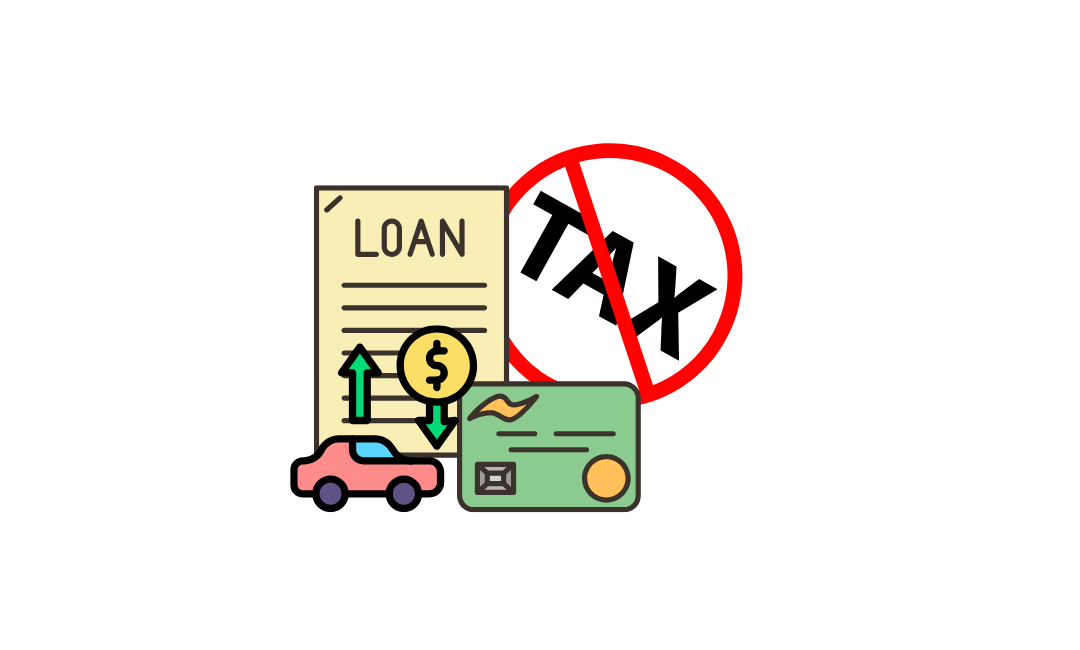
Starting in 2025, many taxpayers will be able to deduct interest paid on qualifying vehicle loans.
This new benefit, sometimes informally called the “No Tax on Car Loan Interest” rule, offers a potential deduction of up to $10,000 per year through 2028 on eligible car loan interest.
If you’re considering financing a new vehicle, this change could reduce the cost of ownership and put more money back in your pocket at tax time.
What Is the New Car Loan Interest Deduction?
Beginning with tax year 2025 (returns filed in 2026), interest paid on certain personal auto loans may be deducted from federal taxable income.
This is a major policy shift.
Previously, interest on personal-use vehicle loans was not deductible for federal income tax purposes.
Because this deduction is applied “above the line,” taxpayers can claim it even if they take the standard deduction.
Deduction Limit:
- Up to $10,000 per year in qualifying car loan interest
- Available for tax years 2025, 2026, 2027, and 2028
Requirements to Qualify
You can only claim this benefit if all eligibility rules are met:
✔ Loan Criteria
- Loan originated after December 31, 2024
- Loan must be secured by the vehicle (lien-based financing)
- Interest must be clearly identified and documented by the lender
✔ Vehicle Requirements
- Must be a new vehicle (first use begins with the purchaser)
- Final assembly must occur in the United States
- Gross vehicle weight rating under 14,000 lbs
- Used vehicles, foreign-assembled vehicles, and leased vehicles do not qualify
✔ IRS Reporting Rules
For 2025, the IRS has issued transitional reporting relief:
-
- Lenders can provide an annual interest statement instead of a specialized IRS form
- VIN and assembly documentation should be retained in case of review
How to Claim the Deduction
Follow these steps to ensure eligibility and proper reporting:
- Obtain an annual interest statement from your lender showing total interest paid.
- Save vehicle documentation verifying final assembly in the U.S. (VIN label, sale paperwork, or manufacturer lookup).
- Report the deduction on the IRS-designated schedule for tax year 2025 and beyond.
- Keep all records in case of audit or request for substantiation.
If refinanced later, eligibility can continue — but only if the original loan met all qualification rules.
Who Benefits Most?
This provision may be especially valuable for:
- Taxpayers financing new personal vehicles
- Individuals who do not itemize deductions
- Families purchasing SUVs, crossovers, or sedans assembled domestically
- Moderate-income households seeking tax relief on higher interest costs
Important Limitations to Know
Before relying on this deduction, keep these restrictions in mind:
- Deduction applies only to personal-use vehicles (not business, lease, luxury or commercial)
- Used, leased, foreign-assembled, or heavy-duty vehicles are not eligible
- Deduction is temporary — 2025 through 2028
- Higher-income taxpayers may be phased out depending on final IRS thresholds
- Proper documentation is mandatory
If you are unsure whether a specific vehicle qualifies, verify assembly location before financing — do not assume all U.S. brands are assembled domestically.
Frequently Asked Questions (FAQ)
Does this deduction apply if I take the standard deduction?
Yes. This is an above-the-line deduction that reduces adjusted gross income. Itemizing is not required.
Do used or leased vehicles qualify?
No. The law requires a new, first-use vehicle purchased with a qualifying loan. Used and leased vehicles do not meet the eligibility standard.
How do I prove the car was assembled in the U.S.?
Your VIN and manufacturer label identify the assembly location. Your dealer should also provide supporting documentation. Keep everything with your tax records.
Is the full $10,000 automatically deductible?
No. You may deduct up to $10,000 in actual, documented interest paid. If your interest is lower, only that real amount may be deducted.
Will refinanced car loans still qualify?
Possibly. Refinancing does not disqualify the deduction as long as the original loan met eligibility criteria and the vehicle still qualifies.
Are business-use or rideshare vehicles eligible?
No. The vehicle must be used for personal purposes. Commercial, business, or mixed-use scenarios may require separate treatment or may not qualify at all.
Does interest on manufacturer financing count?
Yes, as long as the loan meets IRS requirements and proper documentation is provided by the lending entity.
Do electric or hybrid vehicles qualify?
They can, if they are new, personal-use vehicles and final assembly occurred in the U.S. Weight and origin rules still apply.
Is there an income limit for this deduction?
Yes, an income phase-out applies. Higher earners may see a reduced or eliminated deduction based on IRS thresholds once implementation guidance is finalized.
Is This Deduction Worth It?
For taxpayers financing a qualifying vehicle, this rule may create real savings. Those with higher-interest loans may benefit the most — especially over multiple tax years.
However:
- Not all vehicles qualify
- Not all loans qualify
- Income limits can reduce eligibility
- Proper documentation is crucial
Before signing a financing agreement, it may be wise to confirm eligibility with your lender and review your tax position.

Amro Badran, EA, is the Managing Partner of Badran Tax,
With over 40 years of experience and accreditation as a Federal Enrolled Agent,
Amro Badran and his team of tax professionals specialize in helping individuals and businesses resolve complex IRS & state tax issues and controversies.
Experienced and Trusted Tax Resolution Firm based in New Brunswick, NJ.
Disclaimer
This blog post is provided for educational and informational purposes only.
It does not constitute tax, legal, accounting, or financial advice and should not be relied upon as a substitute for professional counseling tailored to your specific situation.
Always consult a qualified tax advisor or legal professional before making decisions based on this content.
Use of this site or information herein does not create a professional relationship between you and BadranTax LLC or its principals. Any reliance on the material is solely at your own risk.
While we strive to provide accurate, up-to-date information, BadranTax makes no warranties, express or implied, regarding accuracy, completeness, or suitability of the content.
Links to external websites are provided for convenience only. BadranTax does not endorse and is not responsible for the content or practices of third-party sites.
BadranTax and its affiliates expressly disclaim all liability for any actions taken or not taken based on this information.