You have seen the ads. Late-night TV, radio spots, sponsored results sitting above every search for tax debt help.
They all promise the same thing, that the IRS Fresh Start Program or IRS Fresh Start Initiative will wipe out what you owe for a fraction of it.
The IRS tax debt program is real. But what the tax ads describe and promise, is mostly, not realistic.
Short Answer
The IRS Fresh Start Program is not a single application, form, or office you can call. It is the name given to a set of collection policy changes the IRS began making in 2011 that widened access to relief options that already existed: payment plans, Offers in Compromise, and tax lien relief.
You apply for those options individually. Whether any of them fits you depends on your financial situation, income, assets, and whether your tax returns are filed.
At a Glance
The IRS Fresh Start Program is an umbrella term for several separate relief options, not one application, and qualifying for the most advertised piece of it is harder than the marketing suggests.
- There is no Fresh Start form. You apply for the underlying option that fits your situation.
- The IRS accepted 5,464 of 38,797 Offers in Compromise in fiscal year 2025, about 14 percent.
- Payment plans, penalty relief, and lien withdrawal help far more people than settlements do.
- Every option requires your tax returns to be filed first. No exceptions.
Who this affects: Individual taxpayers, self-employed filers, and small business owners with unpaid federal tax debt
Updated: August 2026
What is the IRS Fresh Start Program?
In 2011, the IRS announced a set of changes to how it collects unpaid taxes.
It called the effort “Fresh Start”.
A second round of expansions followed in 2012.
Congress did not pass it.
There is no Fresh Start office, no Fresh Start hotline, and no Fresh Start form.
What the IRS did was rewrite its own internal collection procedures so that more taxpayers could reach relief options that were already on the books.
What IRS “Fresh Start” Actually Changed
- Tax lien filing threshold rose from $5,000 to $10,000. Smaller balances stopped triggering an automatic public lien filing.
- Streamlined payment plans expanded from $25,000 to $50,000, with the repayment window stretched from 60 months to 72.
- Offer in Compromise math got friendlier. The IRS shortened how many months of future income it counts against you and loosened which living expenses it allows.
- Lien withdrawal became possible for taxpayers who set up a direct debit payment plan, not just lien release.
Those changes were real and they helped.
Then the marketing arrived.
Tax resolution companies discovered that “the IRS Fresh Start Program” sounded like a limited government offer, something you could be approved for, something with a door that might close.
Fifteen years later, most of what a taxpayer reads about “A Fresh Start Program” was written by someone selling access to it.
The Tax Relief Options: IRS Fresh Start Initiative
Offer in Compromise: The One in the Ads
An Offer in Compromise lets a qualifying taxpayer settle a federal tax debt for less than the full balance.
This is the “settle for less” outcome every commercial is built around.
It runs on a formula, not on sympathy.
The IRS calculates your Reasonable Collection Potential, which is the equity in what you own plus what it expects you can pay out of future income.
If your offer is below that number, it gets rejected. Your hardship story does not move the math.
Your bank statements do.
In fiscal year 2025, taxpayers proposed 38,797 Offers in Compromise. The IRS accepted 5,464 of them, roughly 14 percent. (Source: IRS Data Book, FY2025. Acceptance rates move year to year.)
That rate has been falling. The year before, the IRS accepted 7,199 of 33,591 offers, about 21 percent.
Historically the figure has run closer to a third.
Nobody outside the IRS can tell you where it lands next year, so treat any firm quoting you odds with real suspicion.
Installment Agreements: IRS Payment Plans
This is the option most people actually end up using.
If you owe $50,000 or less in combined tax, penalties, and interest, and you have filed all required returns, you can request a long-term payment plan and spread the balance over as much as 72 months. Short-term plans give you an extra 180 days and are available on balances under $100,000.
You can set most of these up yourself through your IRS online account.
The IRS requires direct debit on balances between $25,000 and $50,000.
One thing the ads skip: interest and penalties keep accruing while you pay.
A payment plan stops the enforcement. It does not stop the meter.
Tax Lien Relief
A Notice of Federal Tax Lien is public record. It follows you into mortgage applications and business credit checks.
Under Fresh Start the IRS generally holds off on filing one until a balance reaches $10,000, though it keeps discretion to file lower if it thinks collection is at risk.
The more useful piece is withdrawal.
The IRS confirms that two withdrawal options came out of the 2011 initiative, including one for taxpayers who enter or convert to a direct debit installment agreement, with general eligibility at $25,000 or less. Withdrawal pulls the lien off the public record.
A release only marks it satisfied. The difference shows up on your credit report.
Penalty Relief and Currently Not Collectible Status: Tax Resolution Options
Neither of these is technically a Fresh Start component.
Both belong in this conversation anyway, because for a lot of taxpayers one of them is the realistic answer.
Penalty abatement removes penalties, not the tax itself and usually not the interest on it.
First-time abatement is available to taxpayers with a clean compliance history, and reasonable cause relief covers circumstances like serious illness or a natural disaster. Currently Not Collectible status is different again. It does not reduce anything.
It pauses IRS collection when paying anything would leave you unable to cover basic living expenses. The debt sits there. The levies stop.
| Option | What It Does | Typical Balance Range | Who It Usually Fits |
|---|---|---|---|
| Offer in Compromise | Settles the debt for less than the full balance | Any amount, driven by assets and income rather than balance | Low income, few assets, no realistic path to full payment |
| Long-Term Payment Plan | Spreads the balance over monthly payments, stops enforcement | $50,000 or less for streamlined handling | Steady income, cash flow problem rather than an ability problem |
| Lien Withdrawal | Removes the lien from public record | $25,000 or less, general eligibility | Anyone whose credit or property is being held back by a filed lien |
| Penalty Abatement | Removes penalties, leaves tax and most interest | Any amount | Clean prior history, or a documented hardship behind the late year |
| Currently Not Collectible | Pauses collection, reduces nothing | Any amount | Income barely covers necessities right now |
What the Tax/IRS Ads Don’t Tell You
Most Fresh Start content online was produced by companies that get paid whether or not the IRS says yes.
That does not make the information false. It does shape which parts get emphasized and which get buried.
Three claims deserve scrutiny.
⚠ Claims Worth Questioning
“The Fresh Start Program is ending soon.” The Fresh Start changes were written into IRS collection procedure years ago and carry no expiration date. The IRS can revise its procedures at any time, but there is no announced deadline to beat. Urgency framing on Fresh Start is usually a sales technique.
“You qualify. Guaranteed.” Nobody can know that before pulling your IRS account transcripts and reviewing your finances. An eligibility answer that arrives before the diagnostic work is not an eligibility answer.
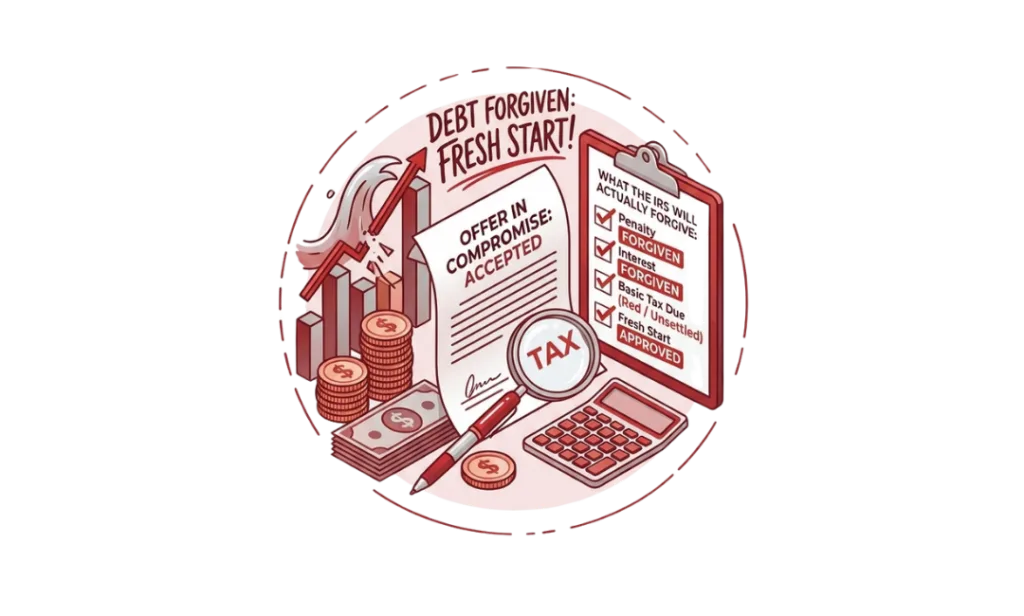
“Settle for pennies on the dollar.” Accepted offers are calculated from what the IRS believes it can collect from you. Some settlements are dramatic. Most are not, and roughly six in seven offers filed in fiscal year 2025 were not accepted at all.
The IRS publishes an annual Dirty Dozen list of tax scams, and aggressive tax debt relief marketing shows up on it with some regularity.
The agency’s own guidance on choosing a representative is worth ten minutes of your time before you sign anything.
None of this means the underlying programs are fake.
They are federal programs with real forms and real criteria.
The gap sits between the programs and the promises made about them.
Serving Taxpayers in All 50 States
Not Sure Which Relief Option Fits Your Situation?
Badran Tax has helped thousands of taxpayers address serious IRS and state tax matters for over 40 years. Our team of Enrolled Agents, CPAs, Tax Attorneys, and Former IRS Agents will review your situation, at no cost.
Schedule Your Free Tax Consultation
or call toll-free: (855) 223-7268
Do You Qualify for IRS Fresh Start Tax Relief?
Before the IRS will consider any of these options, you have to clear a compliance gate.
This is the requirement that surprises people, and it is the one that costs the most time when it gets discovered late.
The Compliance Checklist
- All required tax returns are filed, including old years you may have skipped
- You have received at least one IRS bill for the debt you want to resolve
- Your current-year withholding or estimated payments are up to date
- You are not in an open bankruptcy proceeding
- If you run a business with employees, your federal tax deposits are current
Miss any one of these and the answer is no, regardless of how sympathetic your circumstances are.
A firm that takes your money without checking this first has not done the basic work.
Realistic Outcomes/Examples:
Two composite examples, drawn from the kinds of situations that walk through the door.
A self-employed contractor owing $58,000. Returns are all filed. Income is steady but the money went into keeping the business alive during a slow stretch. He is not an Offer candidate, because the IRS will look at his income and conclude it can collect. His realistic path is a payment plan, possibly with first-time penalty abatement on the earliest year. Not a headline. A resolution.
A laid-off warehouse manager owing $94,000 across four years, two of them unfiled. Almost no assets. Her first step is not an Offer in Compromise. It is getting those two returns filed, because until they are, nothing else is on the table. Once the account is accurate, her financial picture may support an Offer, or it may point toward Currently Not Collectible while she looks for work. The right answer only appears after the transcripts do.
What to Do If You Owe the IRS
Start with information, not with a phone number from a commercial.
- Review your IRS account transcripts. They show what the IRS thinks you owe, for which years, and how much time remains on the collection statute. This is free through your IRS online account.
- Find the unfiled years. Nothing moves until every required return is in. If you are missing several, that is your project before anything else.
- Open the notices. Some carry deadlines that expire, particularly anything referencing a levy or your right to a hearing. Unopened mail does not pause the clock.
- Check the self-service options first. If you owe under $50,000 and your returns are current, the IRS Online Payment Agreement tool may resolve the whole thing in an afternoon.
- Get a professional read before filing an Offer. Submitting one extends the time the IRS has to collect from you, so a weak offer costs more than the filing fee.
Simple cases genuinely are simple.
A single year, a modest balance, filed returns, steady income.
Handle it yourself and keep your money.
It is the layered situations that get expensive when handled wrong: multiple unfiled years, a business with payroll tax exposure, a levy already in motion, or a balance large enough that the IRS assigns a revenue officer.
The team at Badran Tax helps individuals and businesses work through federal and state tax debt across all 50 states, including IRS notices and letters and active collections and enforcement matters.
Frequently Asked Questions
What is the IRS Fresh Start Program?
The IRS Fresh Start Program is a set of collection policy changes the IRS began in 2011 that expanded access to payment plans, Offers in Compromise, and tax lien relief. It is not a single program with its own application. You apply for the individual option that fits your circumstances.
Is the IRS Fresh Start Program real or just a marketing term?
Both, in a sense. The underlying policy changes and relief options are real federal programs with real forms. The phrase “Fresh Start Program” as used in advertising, suggesting a single application with special approval odds, is marketing shorthand rather than an official IRS product.
How do I apply for the IRS Fresh Start Program?
There is no Fresh Start application. For a payment plan, use the IRS Online Payment Agreement tool or Form 9465. For an Offer in Compromise, file Form 656 with Form 433-A (OIC) or 433-B (OIC). For lien withdrawal, file Form 12277. For penalty relief, request first-time abatement or file Form 843.
What is the acceptance rate for an Offer in Compromise?
In fiscal year 2025 the IRS accepted 5,464 of 38,797 offers proposed, about 14 percent, according to the IRS Data Book. The prior year it was roughly 21 percent. The rate shifts year to year with IRS staffing, enforcement priorities, and the quality of applications submitted.
Can the Fresh Start Program actually reduce what I owe?
An accepted Offer in Compromise may settle a federal tax debt for less than the full balance, and penalty abatement may remove penalties. Neither is automatic and both require IRS approval based on your documented finances. Outcomes vary based on your specific situation.
Will a payment plan stop a wage garnishment or bank levy?
An approved installment agreement generally stops new enforced collection while the agreement stays in good standing. If a levy is already active, the timing matters and you may need to act quickly. Interest and penalties continue to accrue throughout.
What happens if I don’t qualify for an Offer in Compromise?
Most people who owe the IRS do not qualify, and other options remain. An installment agreement, a partial payment installment agreement, penalty abatement, or Currently Not Collectible status may all be available depending on your income, assets, and compliance history.
Do I need a tax professional to use Fresh Start relief?
Not always. If you owe under $50,000, your returns are filed, and your situation is straightforward, the IRS self-service tools are designed for you. Professional help earns its cost on unfiled years, business payroll tax issues, active levies, and Offers in Compromise.
Is the IRS Fresh Start Program ending soon?
There is no announced end date. The Fresh Start changes were built into IRS collection procedure and are not structured as a temporary program. Advertising that presents a closing deadline is applying pressure rather than reporting a fact.
What is the first thing I should do if I owe the IRS a lot of money?
Pull your account transcripts and identify any unfiled returns. Until the IRS has an accurate picture of what you owe, no relief option can be evaluated, and no professional can tell you honestly which one fits.
Bottom Line
The IRS Fresh Start Program is real, and it is smaller and more ordinary than the advertising makes it sound. It widened some doors.
It did not create a settlement program that most people can walk into.
For the majority of taxpayers carrying a federal balance, the resolution is a payment plan, penalty relief, a lien withdrawal, or a pause in collection while things stabilize.
Those outcomes rarely make it into a commercial. They are the ones that actually close cases.
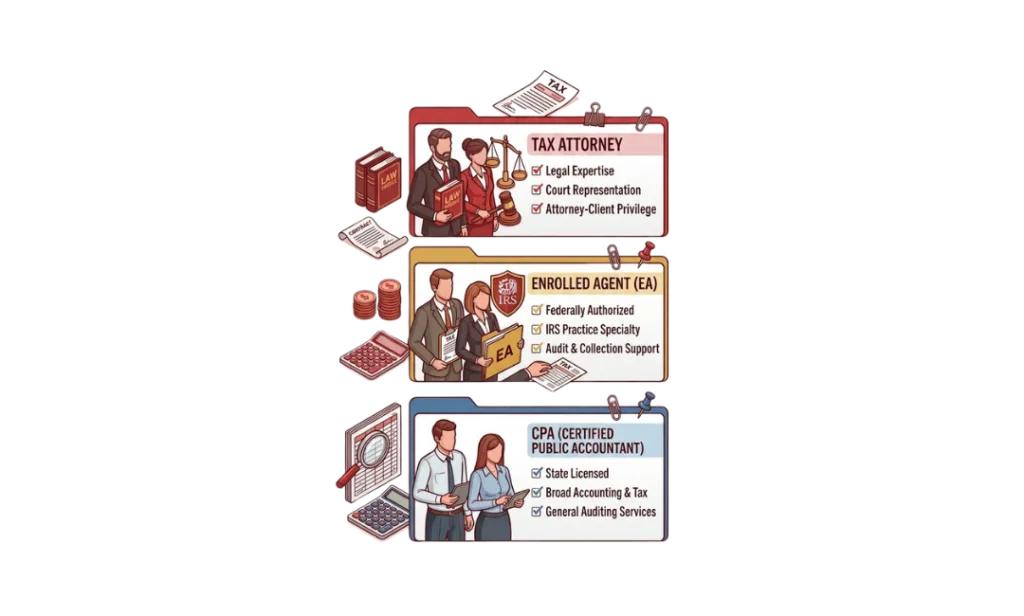
If you are working through IRS tax debt and cannot tell which option applies to you, Amro Badran, EA, Managing Partner of Badran Tax, and the firm’s licensed tax professionals are available to help. With over 40 years of experience resolving IRS and state tax problems, and a team that includes Enrolled Agents, CPAs, Tax Attorneys, and Former IRS Agents, Badran Tax works with taxpayers in all 50 states to identify options and pursue resolution.
40+ Years of IRS & State Tax Resolution
Ready to Resolve Your Tax Problem?
Schedule a free, no-obligation consultation with our licensed tax professionals. We’ll review your situation, explain your options, and help you find a path forward, no matter how complex the issue.
Schedule Your Free Tax Consultation
or call toll-free: (855) 223-7268 | Monday–Friday, 9AM–5PM EST
Sources & Helpful Resources
- IRS: Payment Plans and Installment Agreements
- IRS: Understanding a Federal Tax Lien
- IRS Data Book: Collections, Activities, Penalties and Appeals
- IRS Data Book (Publication 55-B), Fiscal Year 2025
- Internal Revenue Manual 5.12.9: Withdrawal of Notice of Federal Tax Lien

Amro Badran, EA, is the Managing Partner of Badran Tax,
With over 40 years of experience and accreditation as a Federal Enrolled Agent,
Amro Badran and his team of tax professionals specialize in helping individuals and businesses resolve complex IRS & state tax issues and controversies.
Experienced and Trusted Tax Resolution Firm based in New Brunswick, NJ.
Disclaimer
This blog post is provided for educational and informational purposes only.
It does not constitute tax, legal, accounting, or financial advice and should not be relied upon as a substitute for professional counseling tailored to your specific situation.
Always consult a qualified tax advisor or legal professional before making decisions based on this content.
Use of this site or information herein does not create a professional relationship between you and BadranTax LLC or its principals. Any reliance on the material is solely at your own risk.
While we strive to provide accurate, up-to-date information, BadranTax makes no warranties, express or implied, regarding accuracy, completeness, or suitability of the content.
Links to external websites are provided for convenience only. BadranTax does not endorse and is not responsible for the content or practices of third-party sites.
BadranTax and its affiliates expressly disclaim all liability for any actions taken or not taken based on this information.