
If your business falls behind on payroll taxes, the IRS can hold you personally responsible, not just the company.
This is called the Trust Fund Recovery Penalty, and it is one of the most aggressive collection tools in the IRS’s arsenal.
For one construction business owner, that personal liability reached ~$961,000 in assessed tax debt, IRS penalties, and interest.
At a Glance
The IRS Trust Fund Recovery Penalty can attach a business’s unpaid payroll tax debt directly to the owner personally. However, these assessments can be challenged.
- The TFRP holds individuals liable for their company’s unpaid payroll taxes.
- A construction business owner was assessed ~$961,000 personally.
- Professional representation reduced that balance down to $11,000.
- The TFRP survives both business closure and bankruptcy.
Who this affects: Business owners, corporate officers, and anyone personally responsible for a company’s payroll taxes
Updated: June 2026
What Is the IRS Trust Fund Recovery Penalty?
The Trust Fund Recovery Penalty, commonly called the TFRP, is an IRS enforcement tool authorized under Internal Revenue Code Section 6672.
It allows the IRS to hold individuals personally responsible for a business’s unpaid payroll taxes, specifically the portion withheld from employees’ wages.
When a business pays its employees, it is required to withhold federal income tax, Social Security, and Medicare taxes from each paycheck.
That withheld money is considered a “trust fund” because it is collected on behalf of the federal government and belongs to the Treasury, not the business.
If the company fails to remit those funds, the IRS treats the situation as though the money was taken directly from the government.
What the TFRP Covers
- Employee-withheld federal income tax
- Employee portion of Social Security (FICA)
- Employee portion of Medicare tax
- Note: This does not include the employer’s matching share of payroll taxes
The penalty amount equals 100 percent of the unpaid trust fund portion. For example, if a business owed $600,000 in total payroll taxes and $300,000 of that was the employee-withheld share, the IRS can assess the full $300,000 against a responsible individual personally, even after the business has closed its doors.
Who Can the IRS Hold Personally Liable?
The IRS does not limit TFRP assessments to business owners alone.
Anyone the IRS considers a “responsible person” who acted “willfully” in failing to pay the trust fund taxes may be targeted.
Multiple people at the same company can even be held liable for the full amount.
The IRS defines a responsible person broadly to include:
- Business owners and partners: Especially those who controlled the company’s finances or directed which bills got paid.
- Corporate officers: Presidents, CFOs, controllers, or anyone with authority to sign checks.
- Payroll or bookkeeping managers: If they had authority over disbursements and payment decisions.
- Board members: If they exercised financial oversight or directed the company’s payment priorities.
The “willfulness” standard is also broader than most business owners expect.
It does not require intent to defraud the government.
If a responsible person knew payroll taxes were owed and chose to pay other creditors, such as rent, suppliers, or vendors instead of remitting the funds to the IRS, the agency considers that action willful.
This is catches most people off guard.
The TFRP survives business closure and bankruptcy. The IRS will pursue the individual directly, long after the company is gone.
⚠ Common Misconception: Bankruptcy Does Not Clear TFRP
Many business owners assume that filing for bankruptcy will discharge IRS payroll tax liability. It will not.
Trust fund tax debts are explicitly non-dischargeable under federal bankruptcy law.
The IRS will continue pursuing the individual after the bankruptcy case is resolved.
Serving Taxpayers in All 50 States
Facing a Trust Fund Recovery Penalty or Payroll Tax Problem?
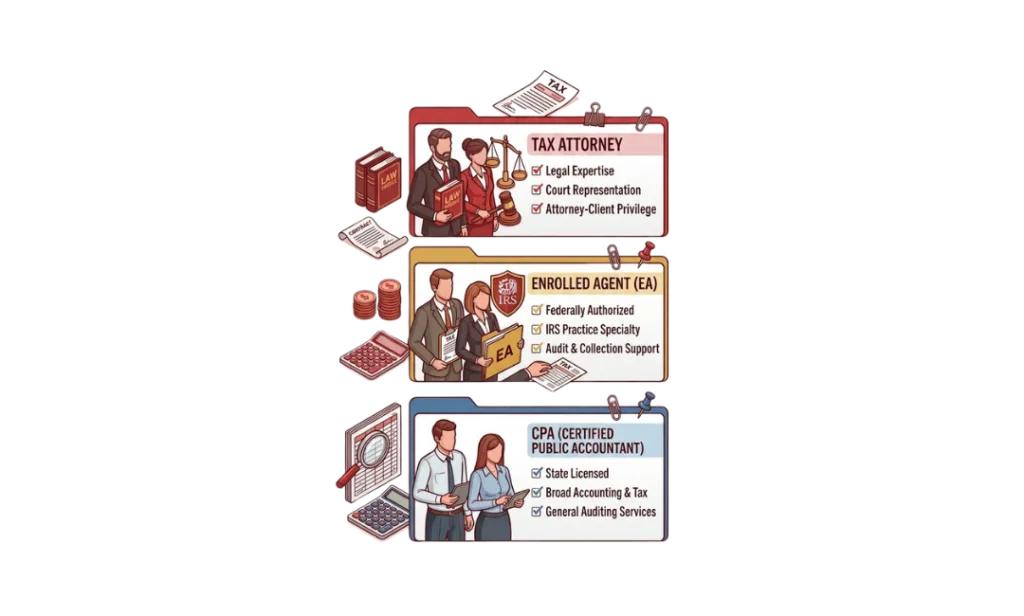
Badran Tax has helped thousands of taxpayers address serious IRS and state tax matters for over 40 years. Our team of Enrolled Agents, CPAs, Tax Attorneys, and Former IRS Agents will review your situation at no cost.
Schedule Your Free Tax Consultation
or call toll-free: (855) 223-7268
Construction Business Owner Assessed ~$961,000 in Personal IRS Liability
Case Study & Badran Tax Success Story
A construction business owner came to Badran Tax facing one of the most financially devastating situations a business owner can encounter. His company had accumulated over $4 million in unpaid 941 payroll tax obligations across multiple filing periods, a problem that had escalated significantly over time without resolution.
When a business reaches that level of payroll tax delinquency, the IRS does not simply pursue the corporate entity. It opens a TFRP investigation to determine which individuals were personally responsible for the failure to pay over trust fund taxes.
In this case, the IRS assessed the owner personally for ~$961,000, representing the trust fund portion of the unpaid taxes plus associated penalties and interest. Even though the business had closed, the debts remained, leaving the owner facing nearly a million dollars in personal IRS liability.
How Our Client’s ~$961,000 Tax Assessment Was Reduced to Only $11,000
Resolving this type of case requires structured, experienced IRS representation. A TFRP assessment is not a fixed, unappealable number. The IRS’s determination of who qualifies as a responsible person, what amounts are correctly attributed to the trust fund portion, and what liabilities can be challenged are all subject to professional review.
Badran Tax’s licensed professionals, including Enrolled Agents with direct experience in IRS collections and enforcement, conducted a thorough audit of the assessment and represented the client throughout the resolution process.
Through Badran Tax representation, the ~$961,000 personal liability was reduced to a final balance of $11,000.
Case Outcome
A $4M+ business payroll tax problem that generated ~$961,000 in personal TFRP liability was resolved with a final individual balance of $11,000. This represents a reduction of about 98 percent achieved through professional IRS representation.
This outcome reflects the specific facts and circumstances of this client’s case. Individual results always depend on the nature of the liability, the documentation available, and each person’s financial situation. However, it illustrates why a TFRP assessment, even a very large one, should never be accepted at face value without a professional review.
What to Do If You’re Facing a Trust Fund Recovery Penalty
If your business has fallen behind on payroll taxes, or if you have already received an IRS notice of a TFRP investigation or formal assessment, the steps you take next matter significantly.
- Do not ignore 941 deposit shortfalls: The IRS monitors payroll tax deposits electronically. Falling behind triggers automated notices quickly, and interest compounds daily. Addressing the issue early preserves more options.
- Do not attend a Form 4180 interview without representation: The IRS’s TFRP investigation interview is designed to establish responsible person status. What you say in that interview is used to support the assessment, making it critical to have a licensed tax professional present.
- Challenge the responsible person determination if it is inaccurate: If you were not the sole financial decision-maker, lacked authority over which bills were paid, or were unaware of the shortfall, those facts should be raised through the proper appeals process.
- Request an audit of what was actually assessed: The TFRP only covers the employee-withheld portion of payroll taxes. Errors in calculation or misclassification of amounts are common and can be identified through a professional review.
- Act before enforcement escalates: Once the IRS moves to levy personal bank accounts, wages, or property, your resolution options narrow. The earlier representation begins, the more leverage you have.
The team at Badran Tax helps business owners navigate IRS trust fund recovery penalties and payroll tax problems across all 50 states.
If you are facing a TFRP assessment or a 941 delinquency, a free consultation can clarify exactly where you stand and what options are available for your situation.
Frequently Asked Questions
What is the IRS Trust Fund Recovery Penalty?
The Trust Fund Recovery Penalty (TFRP) is an IRS enforcement tool under IRC § 6672 that allows the IRS to assess individuals personally for a business’s unpaid payroll taxes, specifically the portion withheld from employees’ wages. The penalty equals 100 percent of the unpaid trust fund amount.
Can the IRS hold me personally responsible for my company’s payroll taxes?
Yes. If the IRS determines you are a “responsible person” who willfully failed to pay over trust fund taxes, it can assess the TFRP against you individually, even if the business has since closed or filed for bankruptcy.
Who qualifies as a “responsible person” for the TFRP?
A responsible person is anyone with authority over the company’s finances who had the ability and opportunity to ensure payroll taxes were paid. This can include owners, officers, controllers, bookkeepers, and board members. Multiple individuals at the same company can each be assessed the full trust fund amount.
Does the TFRP survive if the business closes or files for bankruptcy?
Yes. Trust fund tax debt is non-dischargeable under federal bankruptcy law. Closing the business or filing for bankruptcy does not eliminate the personal assessment, and the IRS will continue pursuing the individual directly.
Can a TFRP assessment be reduced or challenged?
Yes. The IRS’s determination of responsible persons, the calculation of amounts assessed, and the classification of what constitutes the trust fund portion can all be reviewed and challenged through proper representation. Professional guidance is critical to identifying where errors or disputes exist.
What happens during a TFRP investigation?
The IRS will typically request a Form 4180 interview, which is a structured interview used to establish who had authority over the company’s finances and why payroll taxes were not paid. Statements made in this interview are used to support the assessment, so having a licensed representative present is strongly advisable.
How long does the IRS have to assess the Trust Fund Recovery Penalty?
Generally, the IRS has three years from the date a Form 941 was filed to assess the TFRP. If the return was never filed, the statute of limitations does not apply, giving the IRS an extended window to pursue the assessment.
Do I need a tax professional to respond to a TFRP?
Professional representation is strongly advisable for any significant TFRP situation. The process involves IRS interviews, formal appeals, documentation reviews, and direct negotiation with IRS collections personnel, all of which carry consequences that can be difficult to reverse without experienced guidance.
The Tax Bottom Line
The IRS Trust Fund Recovery Penalty is among the most serious tax liabilities a business owner can face.
It reaches past the corporate entity and attaches to the individual, surviving business closure, bankruptcy, and the passage of time.
A $4 million payroll tax problem became a ~$961,000 personal liability for one construction business owner.
With professional representation, that assessment was brought down to $11,000.
If your business has unpaid 941 obligations, or if you have already received an IRS notice of a TFRP investigation, the time to act is now.
The options available narrow considerably once the IRS moves to enforce collection actions.
If you are navigating a Trust Fund Recovery Penalty or payroll tax problem, Amro Badran, EA, Managing Partner of Badran Tax, and the firm’s licensed professionals are available to help.
With over 40 years of experience resolving IRS and state tax problems, the firm utilizes a dedicated team of Enrolled Agents, CPAs, Tax Attorneys, and former IRS agents. Badran Tax works with business owners in all 50 states to identify options, secure compliance, and pursue lasting tax resolution.
40+ Years of IRS & State Tax Resolution
Ready to Resolve Your Tax Problem?
Schedule a free, no-obligation consultation with our licensed tax professionals. We’ll review your situation, explain your options, and help you find a path forward, no matter how complex the issue.
Schedule Your Free Tax Consultation
or call toll-free: (855) 223-7268 | Monday–Friday, 9AM–5PM EST
Sources & Helpful Resources
- IRS: Trust Fund Recovery Penalty — Official Overview
- IRS Form 4180 — Interview for Trust Fund Recovery Penalty Determination (PDF)
- IRS: Employment Taxes — What Employers Need to Know
- IRS Internal Revenue Manual — Trust Fund Recovery Penalty Procedures

Amro Badran, EA, is the Managing Partner of Badran Tax,
With over 40 years of experience and accreditation as a Federal Enrolled Agent,
Amro Badran and his team of tax professionals specialize in helping individuals and businesses resolve complex IRS & state tax issues and controversies.
Experienced and Trusted Tax Resolution Firm based in New Brunswick, NJ.
Disclaimer
This blog post is provided for educational and informational purposes only.
It does not constitute tax, legal, accounting, or financial advice and should not be relied upon as a substitute for professional counseling tailored to your specific situation.
Always consult a qualified tax advisor or legal professional before making decisions based on this content.
Use of this site or information herein does not create a professional relationship between you and BadranTax LLC or its principals. Any reliance on the material is solely at your own risk.
While we strive to provide accurate, up-to-date information, BadranTax makes no warranties, express or implied, regarding accuracy, completeness, or suitability of the content.
Links to external websites are provided for convenience only. BadranTax does not endorse and is not responsible for the content or practices of third-party sites.
BadranTax and its affiliates expressly disclaim all liability for any actions taken or not taken based on this information.